Screen printing is one of the most popular methods for printing designs on t-shirts, bags, hoodies, and many other products.
The quality of the final print depends not only on the screen printing process but also on the type of screen printing ink used.
If you are starting a t-shirt printing business or learning screen printing, it is important to understand the different types of inks available. Each ink has its own advantages and is suitable for different printing jobs.
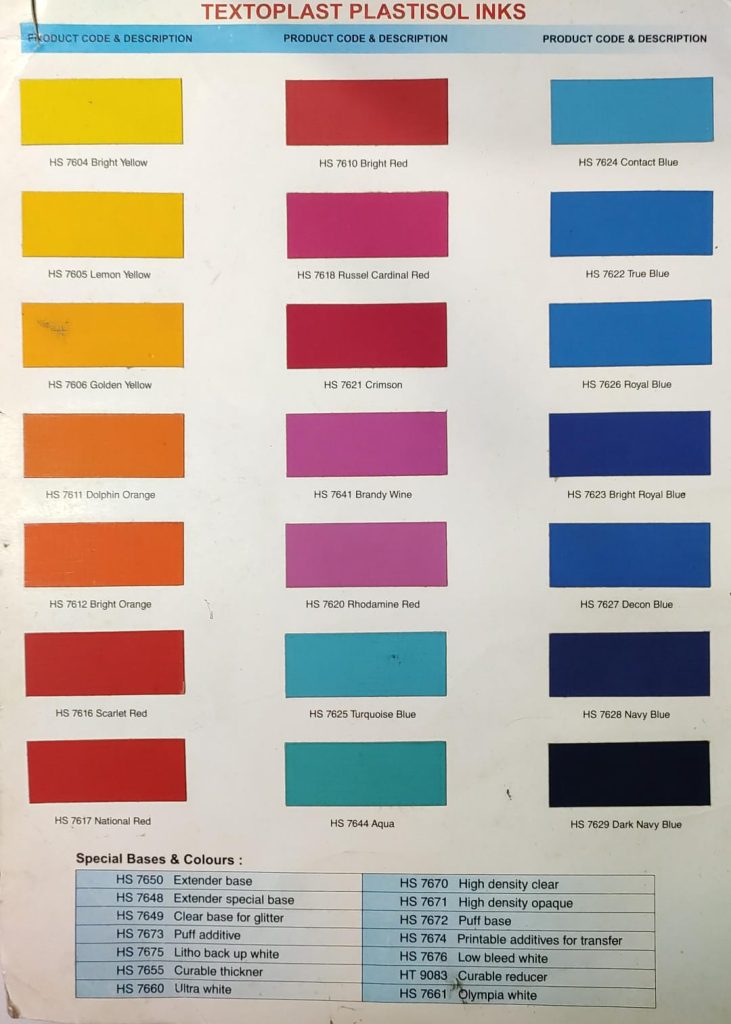
1. Plastisol Ink
Plastisol ink is the most commonly used screen printing ink in the t-shirt printing industry.
- Easy to print with
- Bright and vibrant colors
- Long-lasting prints
- Does not dry on the screen
Advantages:
Best For:
- Cotton t-shirts
- Polyester garments
- Commercial screen printing businesses
Disadvantages:
- Requires heat curing
- Not very eco-friendly
2. Water-Based Ink
Water-based ink penetrates into the fabric instead of sitting on top of it.
Advantages:
- Soft feel on fabric
- Eco-friendly option
- Breathable prints
- Great for fashion garments
Best For:
- Cotton t-shirts
- Premium clothing brands
Disadvantages:
- Dries quickly on screens
- Requires more printing experience
3. Discharge Ink
Discharge ink removes the original dye from dark-colored garments and replaces it with a new color.
Advantages:
- Very soft print feel
- Bright colors on dark shirts
- Professional finish
Best For:
- Dark cotton t-shirts
- High-quality apparel printing
Disadvantages:
- Works mainly on 100% cotton
- Has a strong odor during printing
4. Puff Ink
Puff ink expands when heated, creating a raised 3D effect.
Advantages:
- Attractive texture
- Unique design appearance
- Popular in fashion printing
Best For:
- Fashion brands
- Special design effects
Disadvantages:
- Requires proper curing temperature
- Not suitable for fine details
5. High-Density Ink
High-density ink creates a thick and raised print surface.
Advantages:
- Premium 3D look
- Strong visual impact
- Excellent for logos
Best For:
- Brand logos
- Premium garments
Disadvantages:
- More ink consumption
- Requires experience to print properly
6. Metallic Ink
Metallic inks contain metal particles that create a shiny effect.
Advantages:
- Gold and silver finishes
- Attractive appearance
- Eye-catching designs
Best For:
- Fashion apparel
- Promotional products
Disadvantages:
- More expensive than regular inks
- Can lose shine over time
7. Glow-in-the-Dark Ink
This special ink glows when exposed to darkness after being charged by light.
Advantages:
- Fun and unique effect
- Popular for events and promotions
Best For:
- Event t-shirts
- Kids’ clothing
- Promotional products
Disadvantages:
- Higher cost
- Special printing requirements
8. Reflective Ink
Reflective ink reflects light when exposed to vehicle headlights or flashlights.
Advantages:
- Safety applications
- Unique appearance
- High visibility
Best For:
- Safety uniforms
- Sportswear
- Night event clothing
Disadvantages:
- More expensive than standard inks
Which Screen Printing Ink is Best?
The best ink depends on your project:
- For beginners: Plastisol Ink
- For soft-feel prints: Water-Based Ink
- For premium dark garments: Discharge Ink
- For 3D effects: Puff Ink or High-Density Ink
- For special effects: Metallic Ink, Glow-in-the-Dark Ink, or Reflective Ink
Conclusion
Choosing the right screen printing ink is very important for achieving high-quality prints. Every ink has its own purpose and benefits. If you are starting a screen printing business or learning t-shirt printing, begin with plastisol ink and gradually experiment with other specialty inks as your skills improve.
Understanding different types of t-shirt printing inks will help you produce better prints, satisfy customers, and grow your printing business successfully.